
Joe Says Survivor Jury Had Already Made Up Its Mind
Joe Says Survivor Jury Had Already Made Up Its Mind

Joe Hunter Photo: Robert Voets/CBS.
By John Powell – GlobalTV.com 

He was so close yet so far. Joe Hunter made it to the finals of Survivor once again but nobody sent a vote his way. Joe spoke to us about his game, the pandemonium that was the final Tribal Council and why Jonathan played a better game.
John Powell: Joe. It’s wonderful talking to you today. Congratulations on making the finale of Survivor once again.
Joe Hunter: Thank you, thank you, thank you! Super excited about that!
John Powell: How are you feeling this morning about it all?
Joe Hunter: I’m feeling great. I’m feeling, you know, I’m in gratitude about it. I feel great, man. I feel blessed to be here, and for everything I’ve accomplished in Survivor, I feel great, man. I really do.
John Powell: We saw how things went for you. You didn’t get any votes. Was that a big surprise to you?
Joe Hunter: I don’t even know if I look at it like that, like you know, a big surprise or not. A couple of things. One, to make it back to the final three out of some 751 players who have ever played the game, to do that in your two seasons?
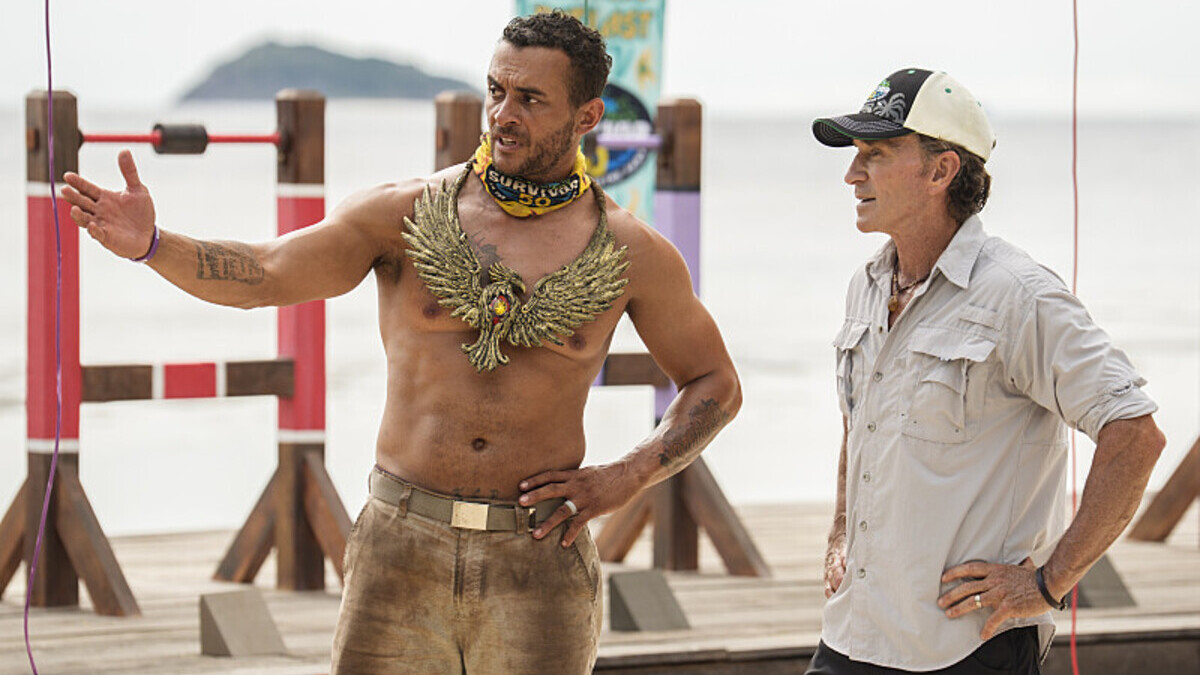
Joe Hunter and Jeff Probst Photo: Robert Voets/CBS.
I look at how many players out of my two seasons have actually beaten me numbers-wise, and then you look at my torch never being snuffed, not voted out, but snuffed, is it different? Then, I look at the overall top three.
I’ve heard I’m tied for top three in Survivor challenges over two seasons in the history of Survivor. I go, man, like, how do you lose that? But to answer your question directly, buddy, I’m sitting at the final tribal in those seats and I knew right when I sat down. I was like, man, this isn’t going to go well with some of them, before I even said a word. Oh, yeah.
John Powell: This is one of the oddest tribal councils I’ve ever seen. I mean, you guys are on the hot seat, you’re fighting for your lives, you’re battling each other psychologically. And then you have the jury, and they’re fighting among themselves. What was it like to sit in front of that, and what was your perception of all that? Because that was the most bizarre jury I’ve ever seen, Joe.
Joe Hunter: You know what it was? And I’m going to be 100% honest with you…I’m going to say this aloud before anyone defends it, I get it. It’s Survivor, you’re allowed to do whatever you want and if you didn’t play well, that’s why they voted. They’re going to justify the votes. I will say this: the jury… it wasn’t a discussion, it was a sentencing. You show up and it’s like, “This is what you’re getting.”

Joe Hunter and his wife Photo: Robert Voets/CBS.
A jury, a debate, a discussion? No. For a handful of them, it didn’t matter what I said. No matter what, they were voting that way. And then what you could feel, in my opinion, was a petition: “This is why you should vote for my person.” “No, this is why you should vote for my person, and we’ve already predetermined who that is.”
So, it’s like, okay, well, you know, I guess I can go home. (laughs) So, I think that’s what we were all feeling. It was passionate.
And then, if you notice—go back and watch it—when questions were asked, they’d say, “Hey, I want to ask the three of you these questions.” They would go, “Okay, let’s start with so-and-so,” and then they would ask the question to one person. Then they got to one person out of the three, and they would just stack on that one person, and some of us never even got a chance to answer the original question. It’s like, I didn’t even get a chance to answer that question.
John Powell: I was going to ask you about that, because I’m sitting there watching it and going, “When does Joe get to answer that question? When?” Just in the interest of fairness, you know?
Joe Hunter: Correct. I’m not trying to say that they didn’t have a reason, but it doesn’t matter—like, give me a shot. Just give me a shot. What’s funny is it’s like, hey, I was trying to talk about the Ozzy vote and when you hear things like, “Oh, nope, you don’t understand the question,” I’m like, let me finish. Because it’s about not letting a point out and making sure their narrative gets sent in. It’s like, okay, I’m not going to argue in this moment. I see what you’re trying to do, I’ll ride with it. All right, that’s what you want to do. So that’s what I thought happened.
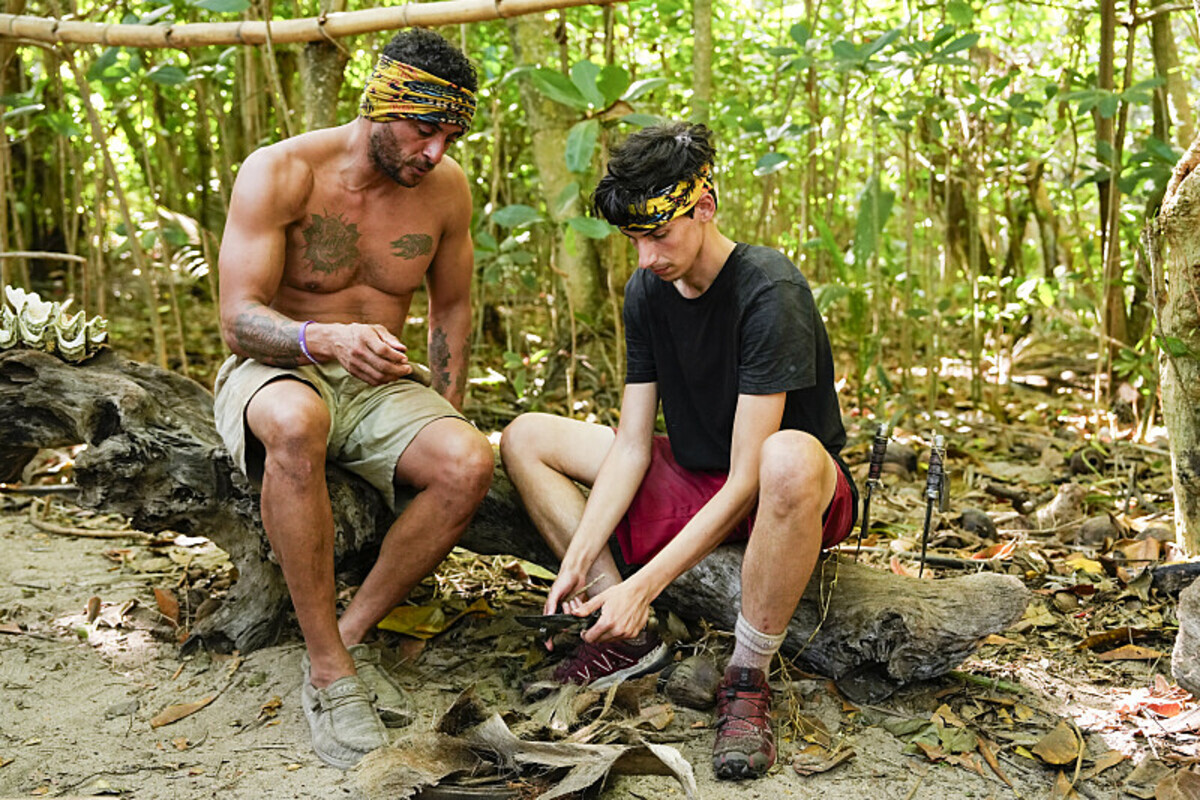
Joe Hunter and Rizo Velovic Photo: Robert Voets/CBS.
John Powell: We saw during the tribal council there were a lot of comments directed toward you and your play. How do you feel about all of that?
John Powell: I’ll tell you this, my man, I won’t comment on a lot of it because I’m trying to stay positive, but it’s like this: somebody made a specific jab about this and about Joe, and here’s what I’ll say in that instance. If I feel in the game of Survivor that we’re friends, sure, and then I’m trying to build an alliance with you, it’s within the game. You’re allowed to lie, you’re allowed to cheat because it’s Survivor.
But, if I feel you’re a friend in the game, an alliance partner, which some people were, I’m going to share things with you that I wouldn’t normally do. Meaning, I’m going to be vulnerable, and I’m going to complain, and moan, and groan. It’s like on this interview, if I were just to say yes, no, right? But if I’m going to be vulnerable with you, it’s because I’m trying to develop that relationship.
And then if it’s taken from that and used as a, “Oh, we have to manage you,” it’s like, well, hold on a minute. I’m saying this in a safe place of, like, I understand the game, I know. I’m only saying this to the two of you because I thought we were developing something and had I known going into it that that’s how we’re doing it, they would have both gotten “good, bad, yep, nope.” I would have just played. So I think that’s one problem with that.
And then the other side that I saw was, you know, when a jury tries to say something and give you a question just to force a specific answer to fit their narrative, is that a question? Because if you’re like, “No, no, you don’t understand, I want you to answer it this way and only say these words,” yeah, then what are we doing, you know? So I feel what you felt. To me, other than Christian, Rick Devens, and Emily, who were definitely trying to make it about their favourite. I feel they gave everyone a shot. I mean, other than that, it was like it was just a sentencing. A sentencing is different than a jury; a sentencing is just telling you what it is.
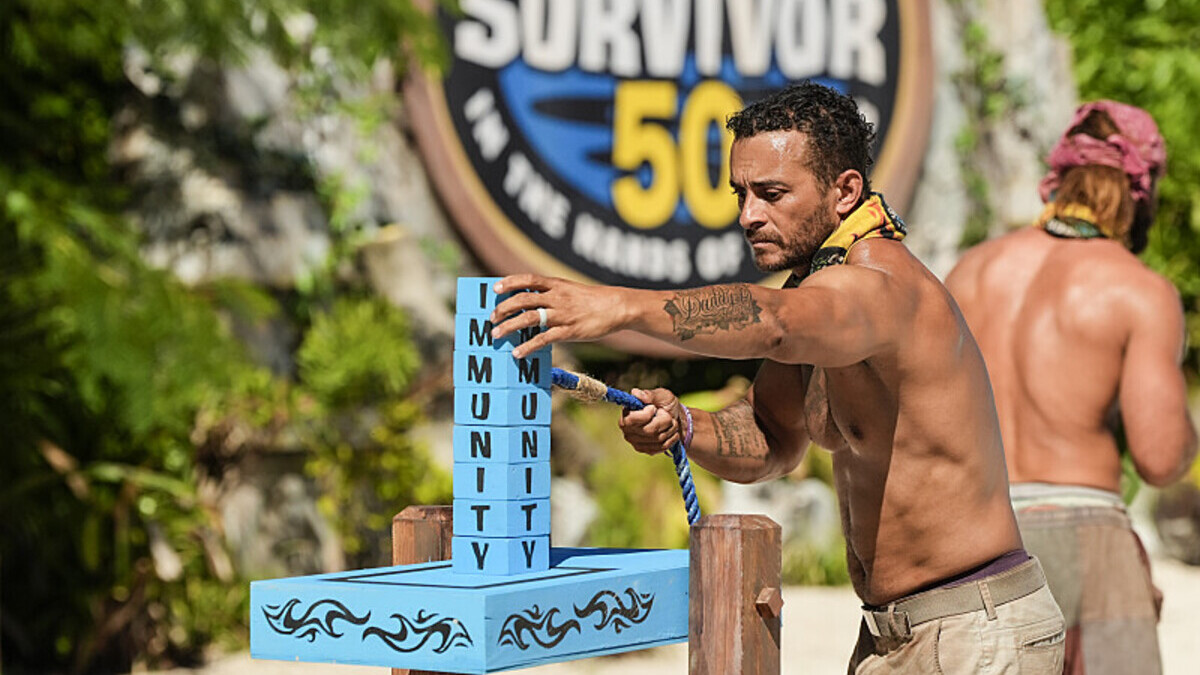
Joe Hunter Photo: Robert Voets/CBS.
John Powell: Well, one of the things that people are going to look back on on your journey, Joe, is, you know, your first season, you developed a relationship, and you took the game and put it aside. You said, “I don’t give a crap what people think about me, this person needs my help, and as a human being, I’m going to extend a hand to them, I’m going to help them.”
We saw that again last night with Rizo. You see him struggling. I know, as a father, my heart would have gone out to him. I’m like, you know, I’ve got to help. I can’t watch somebody suffer like this, I’m a father. You reached out, you helped him, and you guided him. What was going through your mind at that moment? Let us in, because some people are like, “Why is he helping him?”
Joe Hunter: You know, it goes back to this, and this is the Survivor world. If I help him: “Why are you doing that?” I don’t help him: “I’m evil.” I help him: “It’s hurting Jonathan.” I don’t help him: “It helps Jonathan. How could you do that to Rizo after what he shared with you on the beach about his brother?” It’s like, literally, there is no right answer.
So, in those moments, you go, “Look, man, here’s what I can honestly say was the intent, whether people like it or not.” The intent was what I said. Yeah, I was like, “Hey, look, man, if I have two people fighting, you at least want to give everybody a sword.” I meant it. It was like, hey, man, I’m not training him to be the next Kung Fu master. (laughs) It’s like, I’m just saying here’s a bullet, point it in that direction. I didn’t send him to sniper school. It’s like, hey, man, I just thought it would be fair and a human thing to do, and guess what? It’s wrong again.
John Powell: Looking at your game again, you’ve come so close twice. What do you think you have to do, Joe, or is there anything that you need to do to get you over that finish line?
Joe Hunter: I’m going to be real with you on this, and people won’t want to hear this part. A certain kind of charisma, a certain stature, a certain type of individual, yeah, that comes onto the show… and I’m not going to say it’s like this or that because it’ll just spark debate. I do believe that when you look at the average Survivor watcher, and then you look at who they love and who they hate—it’s fascinating. With no words said, before you’ve even started playing yet, you’re hated or loved. Wait a minute, but… and then break down all of those games.
Jonathan, right? He played a great game, played a better game than me. He was strategic, made all these things happen, and was hated. He plays the same way, or I do, as others who are loved, yet we’re still hated. So it’s a deeper dive, but here’s what I’ll say as my official answer: it has to be me. So I’ve gotta keep going back to the job.
People always blame everything else—they blame the edit, they blame this, they blame that. So I’m going to deal with it as the next step up as an athlete. How about this shocking revelation: it’s me. I’ve gotta fix certain things. How about taking full accountability? Right? There’s something shocking that will blow people’s minds. What about just saying it’s your fault?
It must be my fault. So, buddy, I must have played a certain way. I wasn’t strategic, I didn’t do this, I didn’t do that, I didn’t do that. And by the way, not one time this season did I mention honor and integrity. Not once. Yes, but it sure gets thrown on me. And I’m not saying that I’m against it either, I’m just saying that it’s crazy how fans need something to grab onto to hate, so I guess it was my fault.
John Powell: Well, I think, too, it’s that they don’t understand that they’re watching flesh-and-blood people, not characters.
Joe Hunter: Correct.
John Powell: You mentioned, too, about your approach to the game, how you see it and how you play your game, and everybody sees things differently. They have their own games, and you said at the tribal council that you have to change yourself as a person to be able to flow into this game. How did it feel when you had to, you know, compromise that for the game?
Joe Hunter: I mean, I feel like I had to do it when I was pinned in, right? I tried to do it in the best way I could. It wasn’t perfect but it was me trying to adapt. And it just showed me, you know, you’ve got to play the game your way because you still can’t win. Meaning, for some of us, it’s like, “Okay, do it this way, Joe.” Well, then you don’t get credit for the vote, or it’s, “How could you vote out this person? You’re loyal.” Well, you just said play the game! And then when I’m loyal, it’s, “He never votes people out.” And I thought, okay, so unless I stood up and executed some people, it’s like, what do you want from me? So I realized you have to play it on your terms. That’s the best thing I could walk away with.
John Powell: You’re a very passionate guy. You said you’re very emotional. We saw you had an issue with Devens. What was it like, first of all, looking back at the Devens conflict? What do you think about it now? How can somebody who is, as you say, vulnerable, emotional, let’s say emotionally honest with people, get through the game that way? What do you have to do, Joe?
Joe Hunter: It’s a great question, and I’ll tell you this. There was a past player on season 49 Who said, “Yeah, man, I wanted to play like you, and I just got annihilated. I’m not doing that again.” And I thought, it’s crazy to me that we let fans dictate how you feel you should play.
So, my argument is like, Rick is not wrong in how he played the game. Neither is Christian, neither is Emily. I can go on through every single person. It’s ludicrous to me that people think, “Well, that’s Survivor.” Well, then you show me one winner—is every winner playing it exactly the same way every time, and that’s how they’ve won? Because that would mean that’s the rule to win Survivor. I’m like, let everybody play the way they want to play.
So that was my whole thing with this. It sucks that people lock you into this. Like, you play the way you want to play, and if it wins, it wins; if it doesn’t, it doesn’t.
Secondly, with Rick, it really sucks that Rick Devens and I got into this form of a beef. Rick’s a great man. I love him, love his family, love him as a dad, love him as a player. It got spun into this thing, like… I don’t hate how Rick played. It was just a moment, and I’m a passionate person, he’s a passionate person. And then it kind of gained legs, when it was like… look, the reason after that I wanted him out was because he’s the best player, it wasn’t personal and then it got spun that I didn’t like him.
It’s not Rick, you flip the coin, you find an idol, you’re the best. Period. And I love you for it. If you want to sit next to that dude, it doesn’t mean that I don’t like him or love him, or don’t think that his way of playing is right. I never mentioned honor and integrity one time this season.
If I could go back, I’d handle that completely differently. It wasn’t what it seemed. I don’t hate Rick. I love Rick. It’s like, we talked almost after every episode like, “Oh my gosh, we’re good,” you know? So, I love Rick. He’s a great dude.
John Powell: What about your journey on this season do you wish people would have seen? And how do you deal with what people are perceiving of you, as opposed to, let’s say, what really happened out there?
Joe Hunter: That is an excellent question. Here’s what I’ll say I wish they would have seen—I’m going to throw out some examples. I wish they would have seen the relationship with Rizo.
Here’s an example of how it existed: he said it every time he was in a tight spot, he was like, “I gotta tell Joe, we gotta…” I said it back to him, “I can’t burn Rizo, I gotta tell him.” That relationship was much larger. The relationship with Genevieve and me trying to make that work; the relationship that I tried to build with Emily; the relationship that I tried to build with Cirie in the beginning, which I thought was a true alliance, and Tiffany. So, these hidden relationships were strategic.
They just didn’t gain the traction I thought they would, where people would go, “Wow, this dude’s trying.” You might laugh at it, but it’s like, this guy’s trying to play. And those are the moments where I go, man, he’s also not trying to do it in a way to hurt people—he’s just doing it in a way to try to elevate his game.
And then I’ll also say, with that said, regarding this stereotype or perceived notion of, “Joe, you’re this or that,” I want people to treat it more like life. I never said you can’t play it a certain way, so allow me and anybody else to play it their way. Don’t restrict Survivor if you’re a true fan. What you should get enjoyment out of is the journey that we all go on. Followed by, does it really have the same pizzazz if you have all the same type of player? Don’t just assume because of how somebody looks or their stature that, hey, they can’t play it this way.
John Powell: Well, Joe, it was amazing talking to you. I especially love it that, again, you’re this person who is vulnerable, you’re open, you say it how it is, and that’s appreciated, especially these days. All the best to you, and I hope—I really, really hope—in the future that your Survivor journey isn’t over just yet. I’d love to see you in those final seats again, Joe.
Joe Hunter: Thank you, my man. It’s been a pleasure talking to you. Thanks for asking such great questions. I appreciate you.