
Genevieve Mushaluk on the Aubrey Feud: “We’re Just Oil and Water”
Genevieve Mushaluk on the Aubrey Feud: “We’re Just Oil and Water”

Cirie Fields and Genevieve Mushaluk. Photo: Robert Voets/CBS.
By John Powell – GlobalTV.com 

In any returning Survivor season, unless your names are Rizo or Savannah, your reputation for good or for bad proceeds you. On Survivor 47, Genevieve Mushaluk was as scheming and ruthless as they come, well, as scheming and ruthless as a Canadian can be. Coming into Survivor 50, Genevieve knew she had to change people’s perceptions of her and her gameplay. Surprisingly, old schooler Colby Donaldson was a big part of it at the time.
John Powell: Genevieve, thanks for taking the time to talk to us today. How are you?
Genevieve Mushaluk: I’m doing well. How are you?
John Powell: Fine, thanks! I have to say, the most disappointing part about last night was a Canadian will not win Survivor 50.
Genevieve Mushaluk: I know. (sighs) It is a terrible day for Canada, terrible day for us all. (laughs)
John Powell: Why did you decide to come back when that call came in?
Genevieve Mushaluk: Honestly, I didn’t know whether or not I had another kick at the can in me. It takes a lot out of you to play Survivor, especially like the airing; but it was Season 50, and I was like, “I’d be a fool not to say yes.” It’s such an incredible honour and the show means so much to me. So, even if I’m scared and don’t think like I deserve to be there, the fan in me could not ever say no to getting my butt kicked one more time in Fiji, just for Season 50!
John Powell: What was it like playing along some of those legends because you have some of the biggest names on Survivor this season?
Genevieve Mushaluk: It was surreal! It was like you have these legends, right?” And then there’s me. (laughs) It was cool, because once you get going, it’s just so interesting to watch how other people move and maneuver.
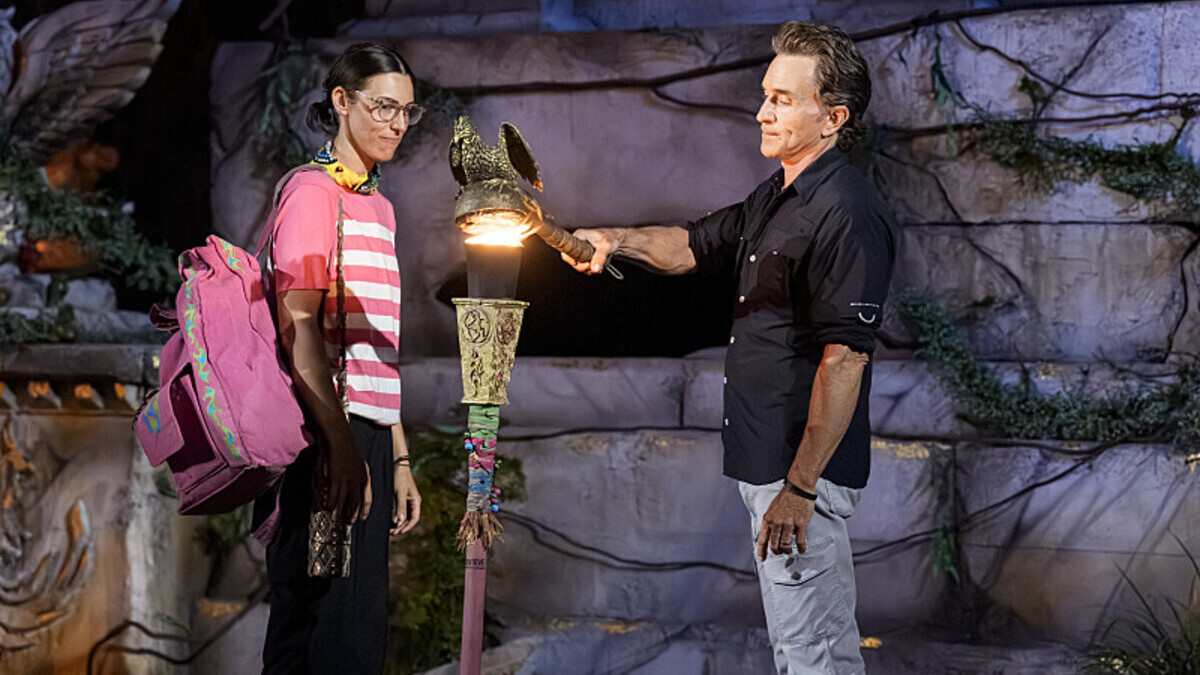
Genevieve Mushaluk and Jeff Probst. Photo: Robert Voets/CBS.
There’s just so much to be learned from any other player on Survivor. There’s so much to be learned if you can sort of get out of your own head long enough to really soak in other people’s approaches. This season was like that on steroids. There was so much to be learned, a masterclass in some of the best ways to move through the game. So, it’s fascinating. The fan in me is loving it!
John Powell: Your reputation preceded you. People know how you played. Was that a concern with you? Did you think about how to mitigate that?
Genevieve Mushaluk: What I thought the perception would be of me is, um, “She’s pretty ruthless, and you can’t trust her.” As everyone on 47 will tell you, they always felt like I did more listening than talking and it was kind of unnerving for people but the good thing about having played once before and then being friends with your cast, is you get the real deal of: “Here’s the first impression you made; here’s what I noticed; here’s what I liked; here’s the sales pitch I did when I wanted to get you voted out.”
So, kind of get your own baseball card back, written by other people. You get to learn how people see you and what your strengths and weaknesses are. I really tried to be cognizant of that going into Season 50. So, if people think I can’t be trusted, then let me tell everybody about the idol I found. If people think, you know, that I keep things to myself and I’m not open, let me talk a lot, you know?
I tried to mitigate that and I think it was working. For the first time ever, I was in a majority alliance! I’ve never got to be the majority alliance in Season 47, ever! So, that was incredible on my first tribe to be in the six instead of the two. I’m normally in the two, you know? (laughs) Everything was going well until it wasn’t, John. (laughs)
John Powell: This season one of the big rivalries was Charlie and Rizo as well as you and Aubrey. What was it? Was it just a case of you guys couldn’t work together? What happened there? Tell us a little bit about that.
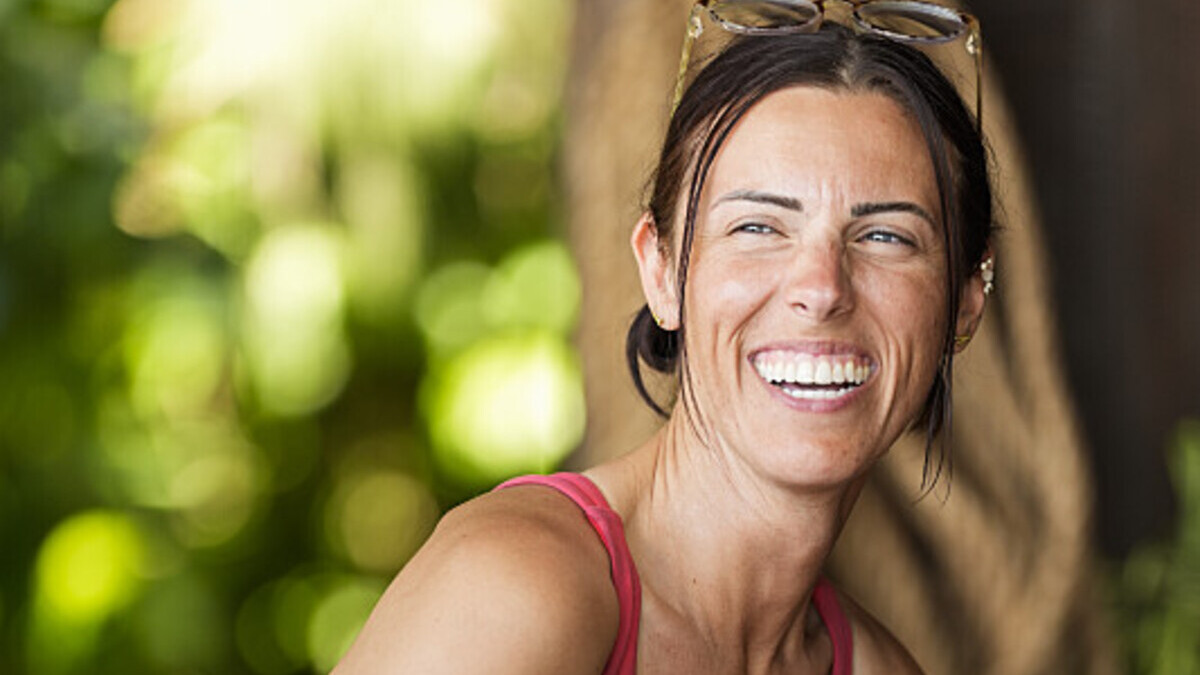
Genevieve Mushaluk. Photo: Robert Voets/CBS.
Genevieve Mushaluk: Yeah, I think it’s interesting because one of the things that I had recognized as a mistake in the first time I played Survivor is I had two concepts of trust and targets. I thought people who I couldn’t trust were therefore targeting me, therefore I needed to target them but what I realized after the game is, well, just because you can’t trust John doesn’t mean he’s targeting you next; and so as long as he’s not targeting you next, you can work with John even if there isn’t trust there.
Really trying to separate those concepts unlocked more options for me with people I could work with, other people. The challenge with Aubrey was I didn’t trust her AND she was targeting me.
It just could never be. It’s not good in Survivor to have people who are openly targeting you and you’re openly targeting them…It really only left me with the option of: “Okay, if I can’t play with her, just like the boomerang idols that I had to give away, what value can I still get out of this?” And so I used it to then go to people and say, “Okay, well, you know, if I’m targeting Aubrey, I’m not targeting you, John. So we can work together,” and, like, try and use that to… okay, if I can’t build something here with her, maybe I can use that material to build a bridge with somebody else.
John Powell: We could definitely work together, no problem! (laughs) Have you spoken to Aubrey afterwards?
Genevieve Mushaluk: The feud was real. It was different. So I think some people think for my first season I had a rivalry with Rachel, who ultimately went on to win. We’re very good friends! We’re attached at the hip! Notwithstanding, she lives in Detroit and I’m on a different side of the border. It’s not that way with Aubrey, unfortunately. I think we’re just like oil and water; different people but that’s the great thing about Survivor is the cast is made up with so many different perspectives and points of view.
John Powell: There’s been a lot of talk about pre-game alliances. What are your feelings about all of that?
Genevieve Mushaluk: I think having positive relationships in the game of Survivor is not a bad thing as it’s a really useful thing. I wish I would have had friends on this season but I think there’s such a range of pre-gaming because I think genuine relationships, where just by virtue of having those friendships, you have an advantage going to the game.
Then I think there is more calculated pre-gaming of, like, “Hey, we’re not friends. Let me reach out and let’s, like, make some deals.” So, they come from different places and I think because of that they have different amounts of value. A real, real friendship, like what you saw with Mike White where he was willing to give up his spot for Angelina. Those are very valuable relationships, whereas other ones, they’re kind of like pie crust promises.
I really feel for Jenna and Savannah because my understanding of the dynamics on that tribe really left it so that there were only three people genuinely vulnerable out of eight and those three people were Jenna, Savannah and Joe, and nobody’s getting rid of the big, strong guy at the beginning of the game, that’s for sure especially if you’re having trouble in challenges. So, that really means, out of a tribe of eight, it’s a 50/50 between two people and that would be really disappointing.
I think it’s a real problem. I just don’t know how you solve it. I can complain about it all day but how do you have a returning player season and benefit from all of the drama and history that comes with relationships without losing some of the integrity of the game to those relationships? I don’t know.
John Powell: There’s been a lot of discussion about the edits of the female players on the show. What are your thoughts on that?
Genevieve Mushaluk: I’m seeing a lot of Christian,you know? (laughs) It’s interesting because there’s two types of confessionals. There’s confessionals that narrate strategy or explain what someone’s thinking and then there’s confessionals that just speak about sort of neutral moments. “Hey, the both pulling up for the merge” that confessional can be given to anybody, right?
It’s interesting when you have the former category, talking about an interaction that you and I have, but it’s only YOUR POV or it’s only MINE. I always wonder why one is shown and not the other. Usually it’s in service of sort of a bigger story. I feel like there could be more done to show the women. I really do.
My concern is that the lack of representation leads some people to believe the women aren’t playing as hard as the men and that is not the case. As someone who’s out there, some people are here because they want to be on TV but a lot of people, like Angelina will tell you, she wants the experience and she doesn’t really give a damn about her minutes balance. The principle of it, I think, upsets her. I totally understand why because it leads people to believe that the women aren’t maybe as funny or as interesting or as trying as hard or have as much going on.

Rizo Velovic and Genevieve Mushaluk. Photo: Robert Voets/CBS.
It’s just such a bummer that people don’t get to see that. I was a part of strategic conversations that I had with Chrissy on the swap pitch and you don’t see any of that. I understand the time constraints but I just really don’t want people to not see it and think because they didn’t see it, it’s not happening.
John Powell: When it comes to your edit is there anything you wish fans would have seen?
Genevieve Mushaluk: Colby and I had a significant moment for me. There was this bonfire we had won at the beginning of the game and I couldn’t sleep in the evening. I noticed he was up and we sat by the fire for a while. I intentionally started the game wanting to be more open with people and it was the first time that I really flexed that and tried it and it went well! As a result of it, and pushing myself out of that comfort zone and connecting with Colby, he advocated for me in moments that other people wouldn’t because we had that real connection.
Then, he leaned on me and I think some people would say, “Well, you know, old school, they’re rigid or inflexible, or, you know, they play the way they play.” He was so adaptable, and I think it’s because we had that trust. So, like those moments, random conversations about life can set the foundation for strategy. So I used to view them as like, “Well, that’s not strategic,” but it very much can be the key that unlocks a door to strategy.
I’m so happy to have learned that and been able to apply it this time and now I have a really good lifelong friend in Colby. I wish people got to see that beautiful moment because it was one of my favorites.
John Powell: Well, it was wonderful talking to you. All the best of luck to you in the future, and can’t wait to see on the finale of what you have to say and relate your experience.
Genevieve Mushaluk: I got nothing to say, just happy to be there. Pretty happy. (laughs)
John Powell: That’s such a typical Canadian response. (laughs)